Our Solution
Azure DevOps Release Pipeline
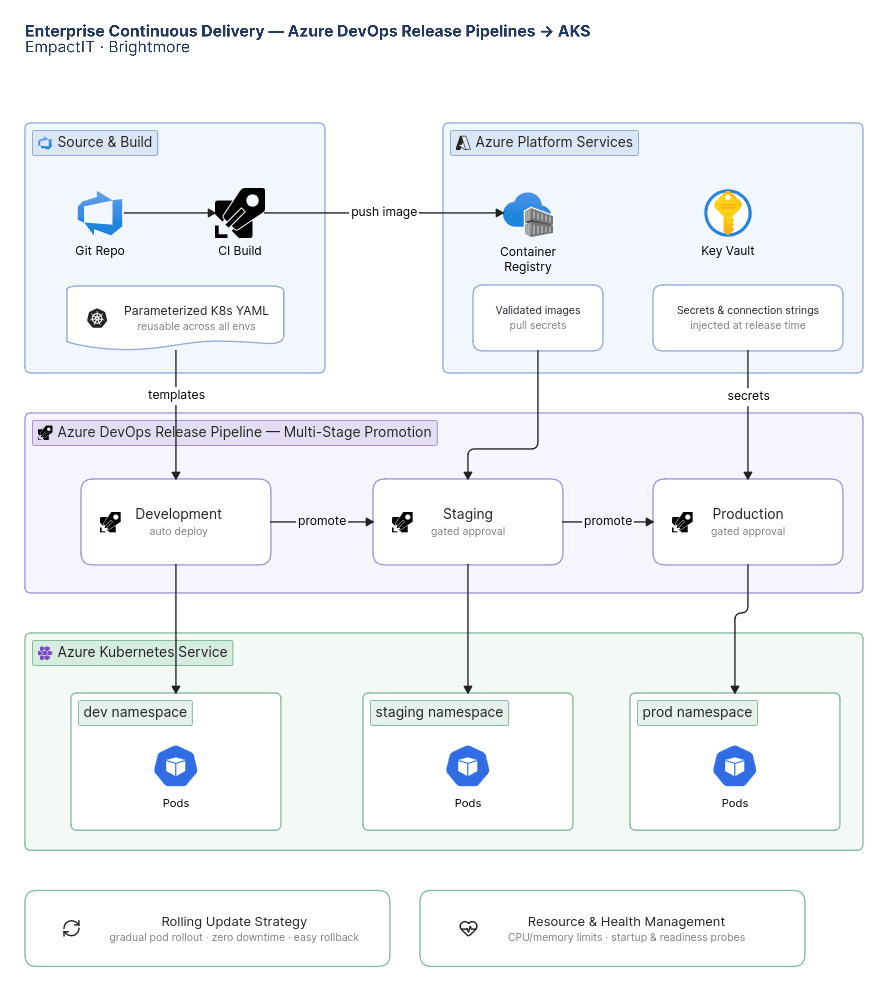
Azure DevOps Release Pipelines serve as the central Continuous Delivery platform for the application.
Once a validated container image becomes available in Azure Container Registry (ACR), the release pipeline automatically promotes it through the deployment lifecycle:
Development → Staging → Production
This controlled promotion process ensures that every deployment follows the same standardized workflow before reaching production.
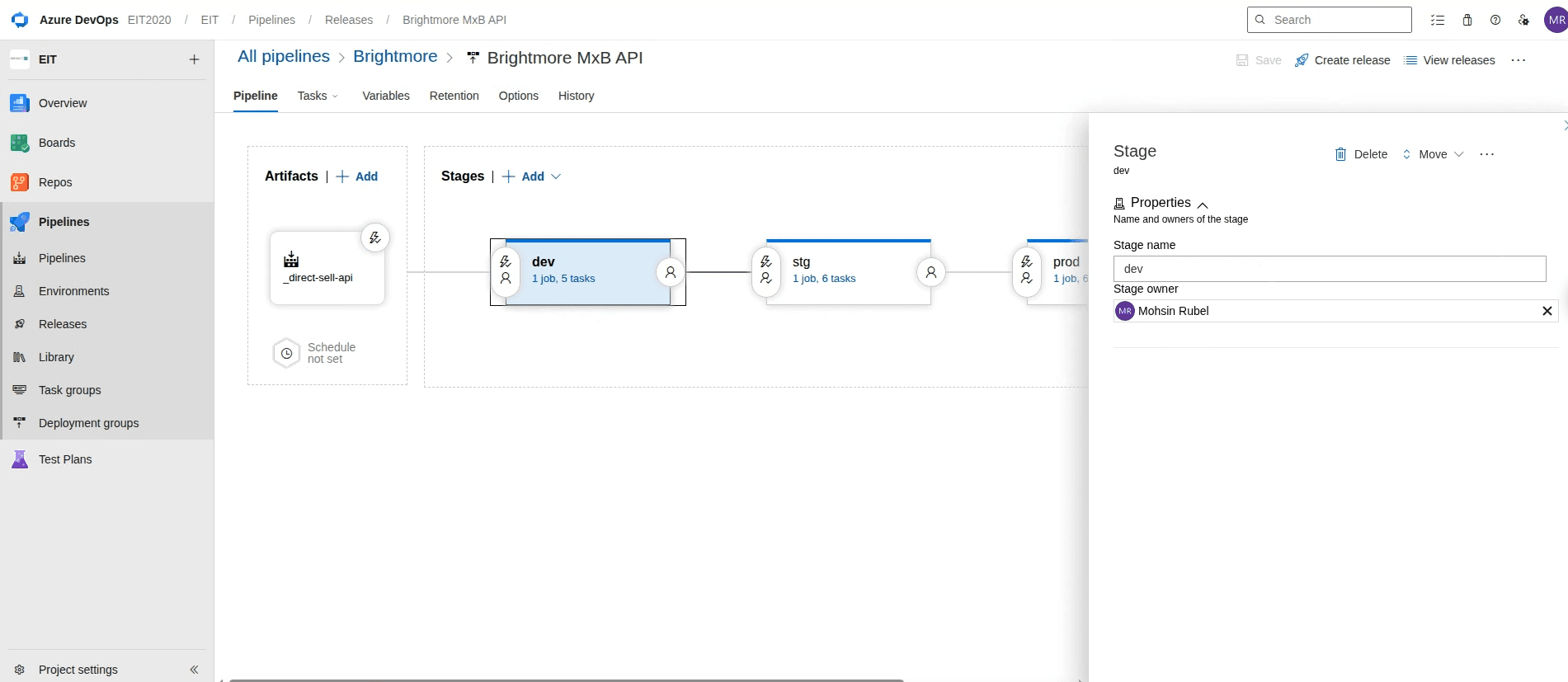
Multi-Stage Deployment Strategy
Each environment is configured as an independent deployment stage within Azure DevOps.
This separation provides:
- Independent environment configuration
- Controlled release promotion
- Environment-specific approvals
- Simplified operational management
- Improved deployment traceability
Using a single release pipeline also eliminates duplicated deployment logic while maintaining consistency across all environments.
Secure Secret Management with Azure Key Vault
Application secrets are never stored inside Kubernetes manifests or Azure DevOps pipelines.
Instead, deployment variables are securely retrieved from Azure Key Vault during the release process.
This approach protects sensitive information such as:
- Database credentials
- Application secrets
- Connection strings
- API keys
- Authentication credentials
Centralized secret management improves security while simplifying secret rotation and operational maintenance.
Parameterized Kubernetes Manifests
Rather than maintaining separate deployment manifests for Development, Staging, and Production, the solution uses reusable Kubernetes YAML templates.
During deployment, Azure DevOps dynamically injects environment-specific values, including:
- Application name
- Container image version
- Azure Container Registry repository
- Image pull secrets
- Resource configuration
- Environment variables
This parameterized approach significantly reduces duplication while ensuring deployment consistency across environments.
Azure Kubernetes Service Deployment
The release pipeline deploys application workloads directly to Azure Kubernetes Service (AKS).
Container images are securely pulled from Azure Container Registry using authenticated image pull secrets, ensuring only authorized workloads can access private enterprise images.
Running the application on AKS provides:
- High availability
- Container orchestration
- Automatic scheduling
- Simplified scaling
- Enterprise-grade platform management
Rolling Update Deployment Strategy
Application updates are performed using Kubernetes Rolling Updates.
Instead of replacing all application instances simultaneously, new pods are introduced gradually while existing pods continue serving requests.
This deployment strategy provides:
- Zero-downtime deployments
- Reduced deployment risk
- Controlled application rollout
- Improved service availability
- Simplified rollback capability
Built-in Resource and Health Management
The Kubernetes deployment configuration includes resource allocation and startup health validation to improve application stability.
By defining compute resources and startup checks within the deployment manifest, the platform ensures workloads start correctly before receiving production traffic.
This improves reliability while helping maintain consistent application performance.